Ikeja Power Outage Today: How Residents Can Check the Real Status and Share Updates That Help
Why the Ikeja power outage today is rarely one single fault, how to check Ikeja Electric and TCN before you share, and what a genuinely useful transformer or feeder update looks like for neighbours.
First, work out what is actually down
When the lights go off in Ikeja, the most useful question is not 'when will power come back' but 'how far down is this.' Electricity reaches a home in stages: generation on the national grid, high-voltage transmission handled by the Transmission Company of Nigeria, the 33kV and 11kV feeders a distribution company runs through your area, and finally the distribution transformer that serves your street or estate. A fault anywhere on that chain can leave a compound in darkness, which is why a neighbour three roads away can be running a generator while your feeder is fine, or the other way round.
That single distinction changes how you should react and what you should post. A grid-wide allocation shortfall calls for a different response from a transformer that has tripped on your own feeder, and vague 'no light again' messages blur the two together. The fastest way to separate them is to find out, from people who are actually there, whether the outage is your compound, your street, your feeder, or the whole grid.
Check the official sources before you share
Ikeja Electric, based in Ikeja itself and widely described as Nigeria's largest electricity distribution company, supplies most of Lagos and parts of the neighbouring states. It publishes fault and planned-maintenance notices on its official channels, including a running network fault log that lists feeder-level problems, and its management has repeatedly put recent reductions in supply hours down to a shortfall in the power allocated to its network from the national grid. That explanation was reported by Punch on 5 October 2026 and repeated in an Ikeja Electric statement dated 19 October 2026 and carried by TVC News.
So before you forward a voice note or a screenshot, spend two minutes on the real sources: the distribution company's own fault notices and the Transmission Company of Nigeria's grid updates. If the company has already logged a fault on your feeder, or has acknowledged a grid-wide allocation problem, you know the likely cause and can say so with a reference rather than a guess. Confirming first is the whole difference between an update that helps the street and rumour that spreads panic.
What a genuinely useful outage update looks like
The reports that actually help neighbours are specific, dated, and honest about what the author can see. A good one reads like a small incident note rather than a complaint broadcast, and it usually carries five things:
The first is place: the street, estate, or a landmark people recognise, not just 'Ikeja.' The second is what you can see, such as which transformer or pole is involved and whether anything tripped, sparked, or is making an unusual noise, paired with a clear note not to approach it. The third is timing: the hour supply started, and whether it is out completely or coming in and out. The fourth is spread: whether neighbours on the same transformer are also affected, which is what separates a network fault from a single-compound problem. The fifth is status: whether Ikeja Electric or the Transmission Company of Nigeria has already acknowledged it, with a reference if one exists.
- Where, at street or estate level with a recognisable landmark
- What you can see, including any transformer or cable hazard and a note to keep clear
- When supply started, and whether it is total or intermittent
- How far the outage reaches across neighbouring streets on the same transformer
- Whether the distribution company or TCN has logged it, with any reference
Escalating a real fault the right way
When a fault is genuinely yours to chase, a transformer that has been off for days, a recurring feeder trip, or a meter problem sitting behind the darkness, there is a published route. NERC says the first point of call is the Customer Complaints Unit at your distribution company; if that does not resolve it, you escalate to the state Consumer Forum and then to NERC itself. That order is set out on NERC's own complaint page and applies right across Nigeria, Ikeja included.
None of that is legal advice; it is simply the sequence the regulator publishes, and it lands better when the report behind it is tidy. One well-documented complaint, naming the feeder or transformer, the time supply started, the number of households affected, and any reference the company has already logged, carries more weight than a hundred scattered calls describing the same fault differently. And a plain limit is worth stating: Watchdoor does not sit inside that process. It is not the distribution company, it has no agreement with any power agency, and it cannot restore supply or send engineers. Its only job here is to help neighbours hold one clear, shared record that makes both the update and the escalation easier.
Where a neighbourhood app earns its place
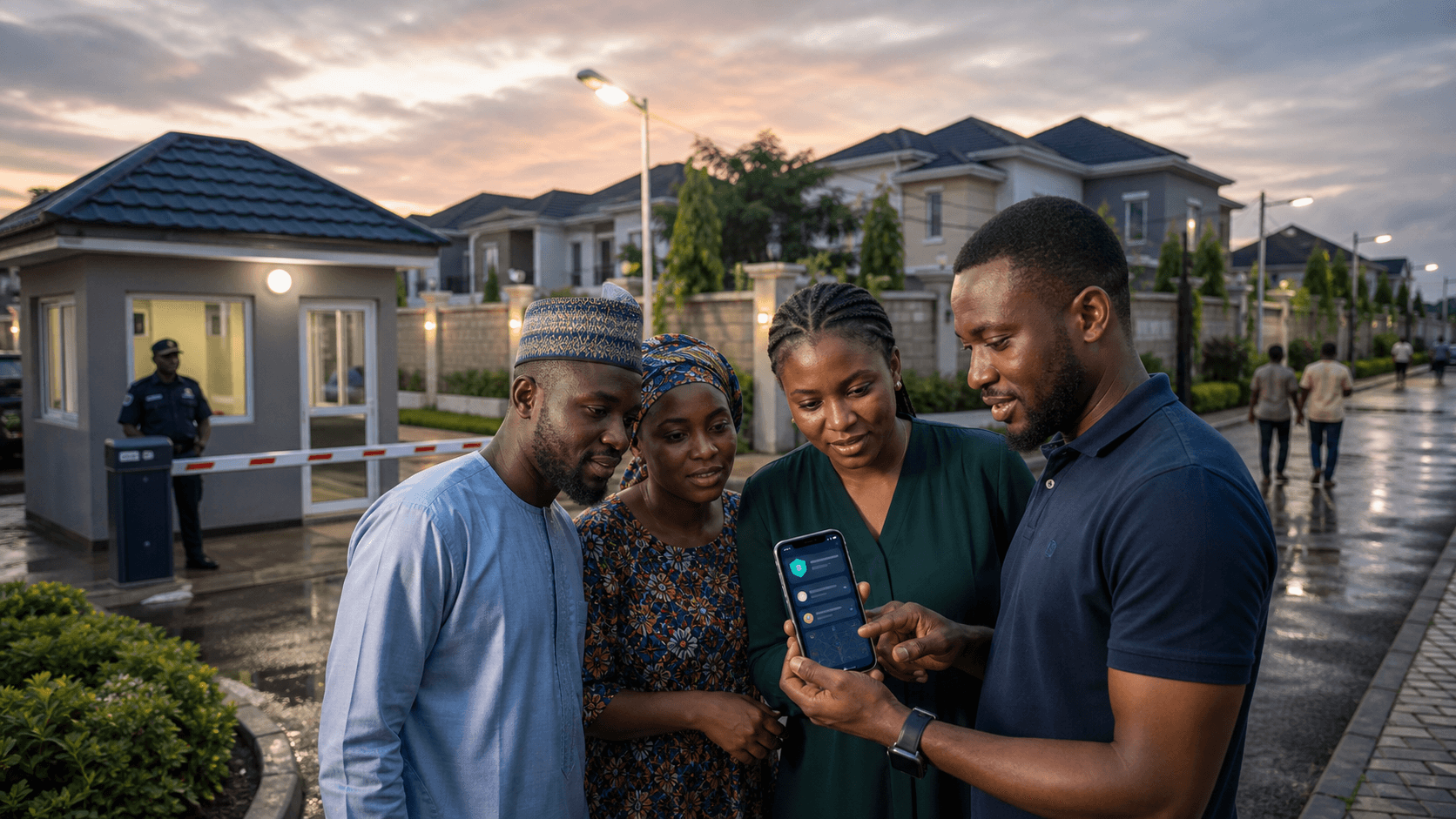
A group chat scrolls, and the useful part of an outage, what went down, when, where, whether the company has acknowledged it, whether the reported sparking transformer has got anyone to keep children and pedestrians clear, is buried within minutes. A verified neighbourhood space keeps that log in one place and tied to a place name, so a resident arriving home can see the state of their own feeder without reading two hundred messages, and a residents' association can show that a transformer has been off for days with a time stamp on every observation.
That is the practical version of neighbourhood alerts for something as routine and as disruptive as power. Pair the official sources with what verified neighbours are actually seeing, label confirmed facts apart from guesses, and a street that used to trade in panic gets something better: a shared, dated picture of the outage, and a cleaner case to put to the distribution company when it is time to escalate.
Sources used for this article
Quick answers
Why is there a power outage in Ikeja today?
It can be any link in the chain: reduced allocation on the national grid, a transmission fault, a problem on the 33kV or 11kV feeder serving your area, or the distribution transformer for your street. Ikeja Electric has attributed recent reductions in supply hours to a shortfall in the power allocated to its network from the grid, but a single dark estate usually has a local cause, so check the distribution company's fault log and what neighbours on your transformer can see before assuming it is citywide.
How do I report an Ikeja Electric outage?
Follow the route NERC publishes: raise the issue first with the Customer Complaints Unit at your distribution company, then escalate to the state Consumer Forum and to NERC if it is not resolved. Include the feeder or transformer, when supply started, and how many homes are affected. Watchdoor is not the distribution company; it has no agreement with any power agency and cannot restore supply or dispatch engineers, so its only role is to help neighbours keep a clear, shared record to report from.
Should I approach a transformer that is sparking or humming loudly?
No. Keep clear of any damaged transformer, downed or exposed cable, or substation, warn the people around you, and report the hazard to the distribution company. Do not try to inspect or touch electrical equipment; that work belongs to qualified line staff, and a hazard is not something to photograph up close.
What should I avoid posting during an outage?
Skip unverified cause-and-effect claims, blame, and anything that could trigger a rush or panic. Post what you can actually see, say when and where it started, and keep confirmed facts separate from guesses so neighbours know what to trust.
Can an app reduce how long I sit in the dark?
Not directly. Nothing in a neighbourhood app fixes a fault or forces faster restoration. What it can do is stop your street trading in rumour, hold a dated record of an outage that runs into its second or third day, and turn scattered 'no light' messages into one clear report that is easier to put to the distribution company.
More from the Watchdoor blog
Keep exploring Watchdoor
Use the feature overview to understand the full platform, or visit the business page to see how local growth tools fit into the broader neighborhood product.